How Can Features of Blockchain Support Sustainability Efforts?
Table of contents (6)
In recent years, the intersection of blockchain technology and sustainability has been a focal point in discussions concerning relevant business practices. The evolution of blockchain has introduced a promising era for fostering sustainability efforts across various industries.
The Synergy Between Blockchain and Sustainability
Blockchain technology’s integration with sustainability initiatives stems from its fundamental characteristics. Renowned for its decentralized and transparent nature, blockchain possesses an array of attributes that intricately align with sustainability principles. Insights from industry experts have accentuated the pivotal role played by blockchain’s features—such as immutability, distributed ledger, decentralization, and consensus algorithms. These features serve as the bedrock reshaping the landscape of sustainable business practices.
The stability of blockchains ensures that once data is recorded, it remains immutable, safeguarding the integrity of information critical for sustainability endeavors. Moreover, distributed ledger systems empower multiple participants to access and authenticate transactional data, fostering transparency and accountability, key tenets of sustainable business operations.
The decentralized structure and algorithms of blockchains prevent singular control, endorsing a democratic decision-making process aligned with sustainability’s values of inclusivity and shared responsibility. These features collectively forge the pathway for businesses to reimagine and realign their strategies, integrating sustainability at the core of their operations.
Blockchain’s Impact on Transparency and Traceability
Blockchain technology serves as the backbone for elevating transparency and traceability within supply chains. This way, every phase of a product’s journey, starting from the acquisition of raw materials to its final destination, is meticulously documented and securely stored on an immutable ledger. By immutably recording every transaction and movement within the supply chain, blockchain assures the authenticity of data, creating an indelible record that showcases the product’s entire lifecycle.
This robust transparency has profound implications, enabling businesses to pinpoint inefficiencies, identify potential areas for improvement, and enhance the overall integrity of their operations. Additionally, consumers are empowered with detailed information about the products they purchase, allowing them to make informed choices based on ethical sourcing, sustainability practices, and authenticity. Such transparency establishes a robust system of accountability, compelling businesses to strictly adhere to sustainability standards, fostering ethical practices across the supply chain.
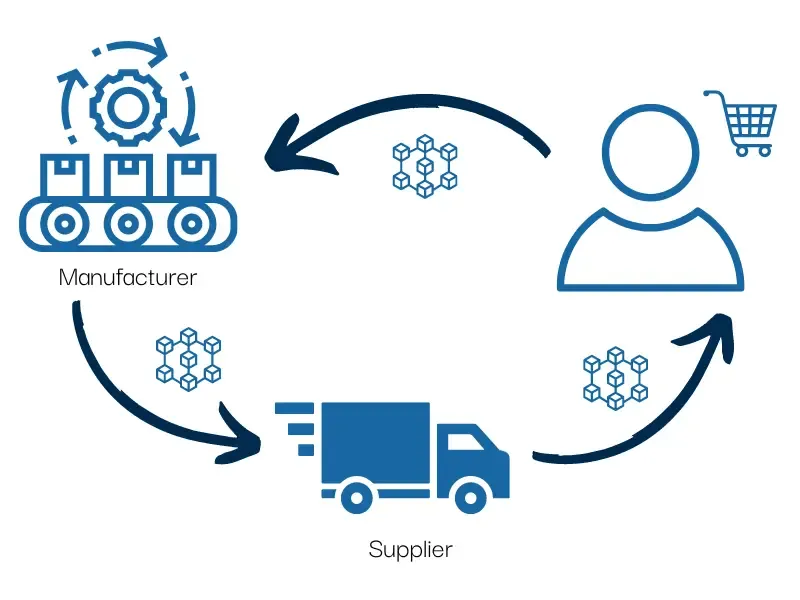
Blockchain technology increases transparency and traceability
Diverse Real-World Applications
The integration of blockchain technology across various sectors underscores its transformative potential in revolutionizing sustainable practices. Its application spans industries like supply chain management, energy trading, and healthcare, showcasing its ability to significantly reduce fraudulent activities while promoting environmentally conscious initiatives.
Energy Management and Waste Reduction
Blockchain-powered peer-to-peer energy trading allows renewable energy producers to directly sell excess energy to consumers, circumventing traditional utility companies. This innovative system enables renewable energy producers, such as owners of solar panels or wind turbines, to directly sell surplus energy to consumers without intermediaries, traditional utility companies, or centralized grids. By leveraging blockchain’s decentralized framework, excess energy is efficiently distributed to those in need, encouraging the adoption of renewable energy sources and mitigating reliance on fossil fuel-based electricity generation.
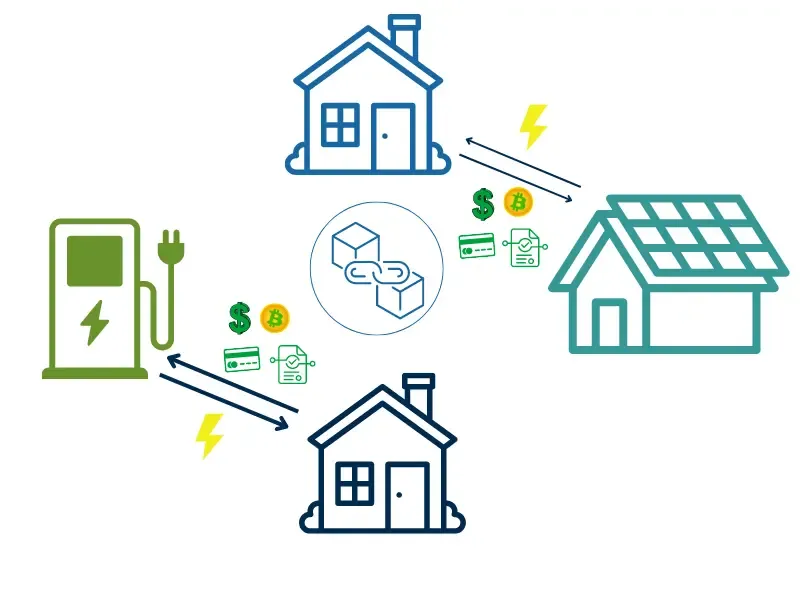
Blockchain features can be used to increase energy efficiency
Furthermore, within the realm of waste management, blockchain technology offers transformative solutions to incentivize and monitor proper recycling practices. By implementing blockchain to transparently track waste disposal processes, stakeholders across the waste management chain—from collectors to recycling facilities—can ensure compliance with eco-friendly waste management protocols. The blockchain ensures that data regarding waste handling, recycling initiatives, and disposal methods remains tamper-proof, facilitating transparency and accountability throughout the process.
This transparency and accountability are further enhanced by the use of smart contracts embedded in blockchain-enabled waste management systems. These contracts automate and validate recycling efforts, providing secure rewards recorded on the blockchain. By encouraging recycling and reducing landfill waste, these initiatives significantly contribute to establishing a circular economy.
Education, Well-being and Land Management
Beyond traditional business sectors, blockchain has the potential to transform education systems by ensuring academic integrity through encrypted records and authentication protocols. With this technology, educational institutions have the opportunity to create a more secure and efficient system for storing and sharing student records. Similarly, in healthcare, blockchain ensures the confidentiality of patient clinical information, securing sensitive data and maintaining privacy.
Furthermore, blockchain technology’s role in land management and conservation cannot be overlooked. By establishing secure digital land registries and enforcing conservation agreements, blockchain can prevent illegal activities such as deforestation and land encroachment, thereby promoting environmental conservation.
The Future of Sustainable Business Practices
In combining blockchain technology and sustainable business, we witness a new frontier marked by honesty, transparency, and ethical responsibility. Blockchain’s special traits—its unchangeable nature, openness, and lack of centralized control—usher in a transformation in how businesses approach and practice sustainability.
Businesses can now use blockchains to reshape how they manage supply chains, trade energy, handle waste, and more. It helps in tracing product origins, promoting renewable energy use, and ensuring responsible waste disposal—a move towards ethical business practices.
However, while adopting blockchain for sustainability it’s crucial to establish solid governance models and adaptable solutions. By focusing on these factors, businesses can make the most of blockchain while using it responsibly. Creating clear rules and flexible solutions helps ensure blockchain technology fits well into sustainable business practices.
The future of sustainable business lies in embracing innovative technologies like blockchains. Dive into the evolving realm of decentralized solutions and stay ahead in the dynamic landscape of sustainable innovation.